The Mar Vista Tract
FIELD. NOTES. LA. / 0016 / MAR VISTA / 2026
The Mar Vista
Tract
Gregory Ain designed a neighborhood around repetition. Walking it with a camera reveals how much of its character comes from everything that refuses to repeat.
01
Mar Vista asks
you to slow down.
From a moving car, much of the neighborhood can disappear into an ordinary Los Angeles streetscape.
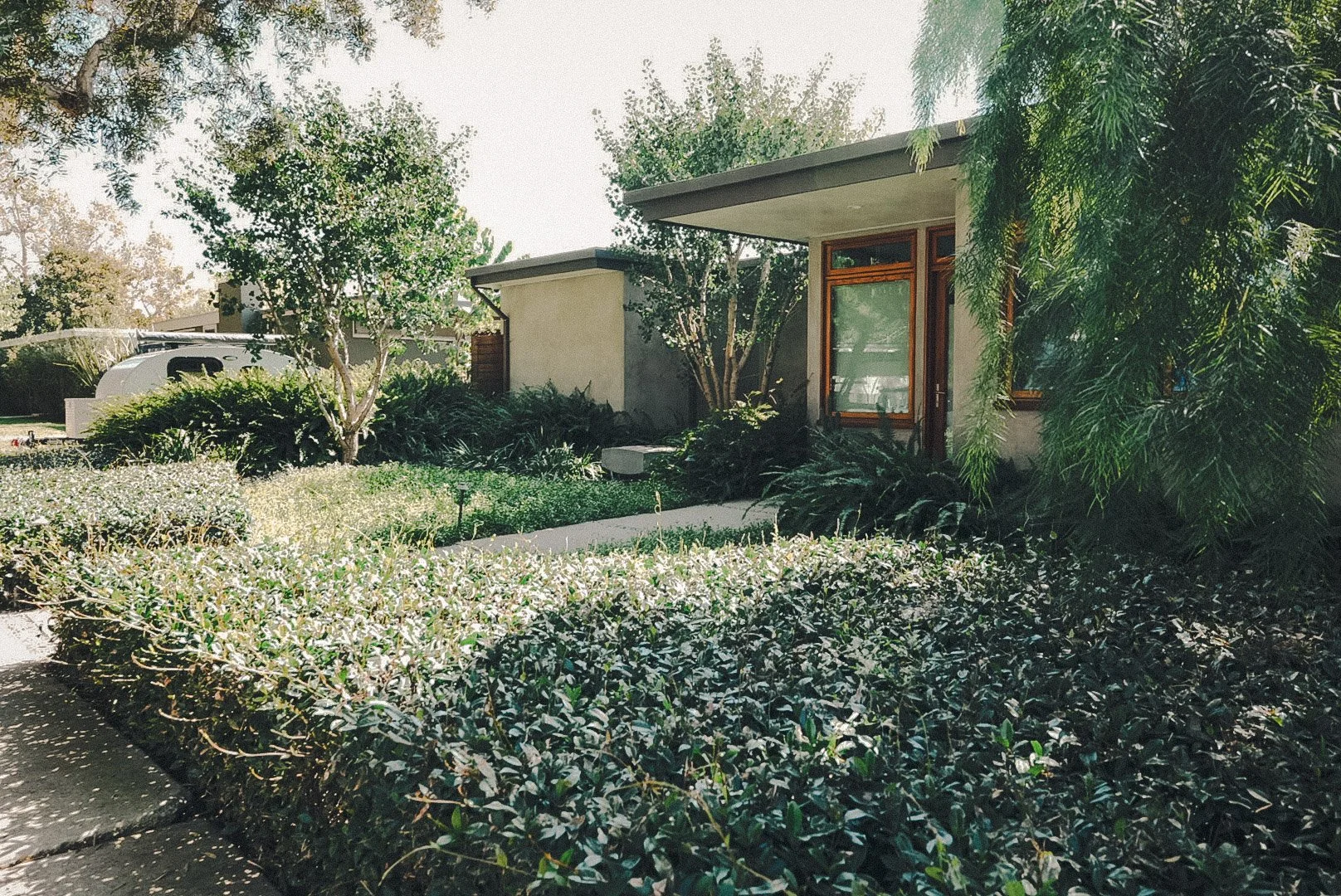
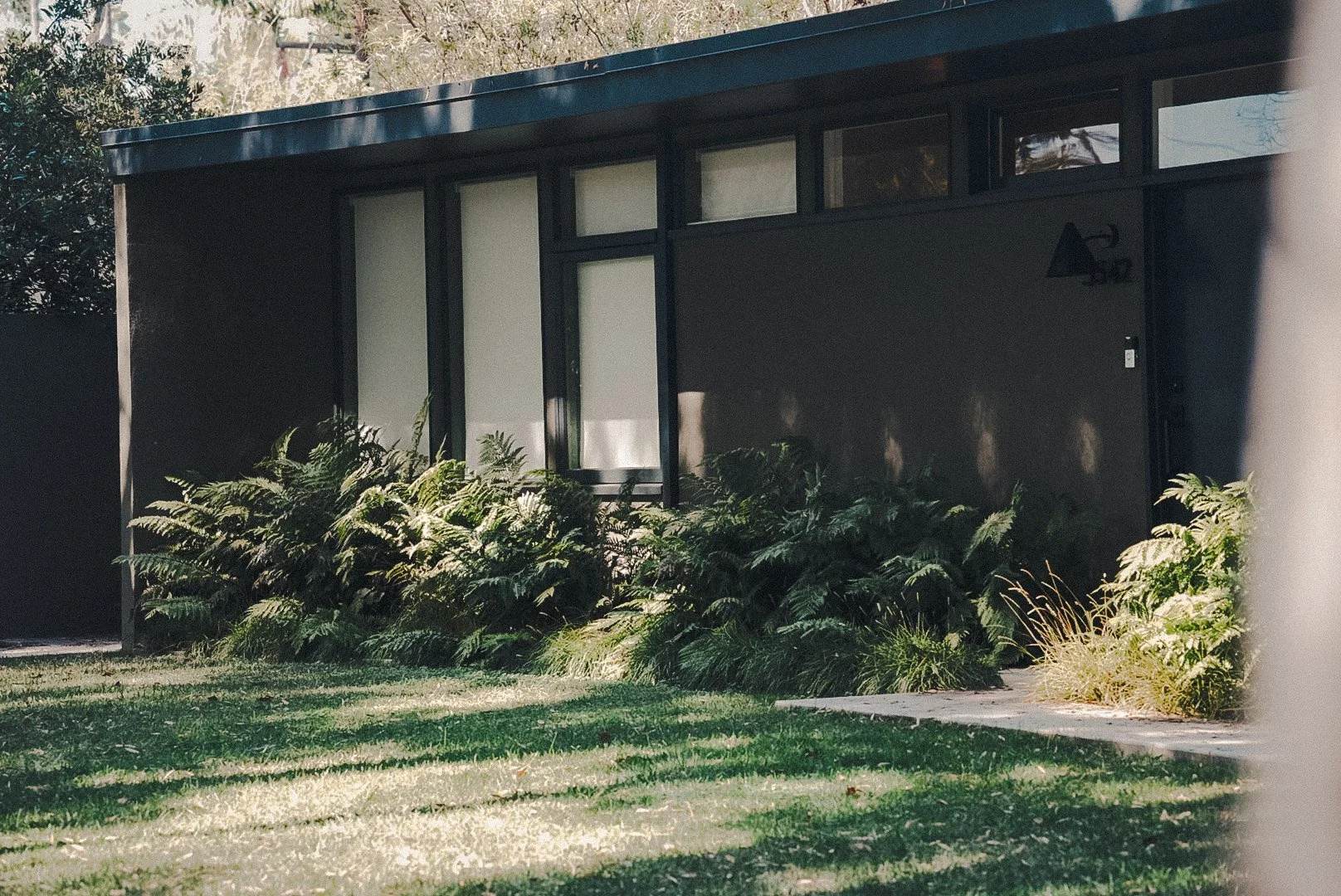
On foot, the frame changes. Roof planes float behind hedges. Clerestory windows appear underneath deep eaves. Entrances recede behind planting. Thin supports hold broad horizontal lines just above the landscape.
Nothing announces itself particularly loudly. That makes the neighborhood unusually rewarding to photograph.
The camera starts looking less for monuments and more for relationships: architecture against foliage, structure against shadow, one repeated house against the individual life accumulating around it.
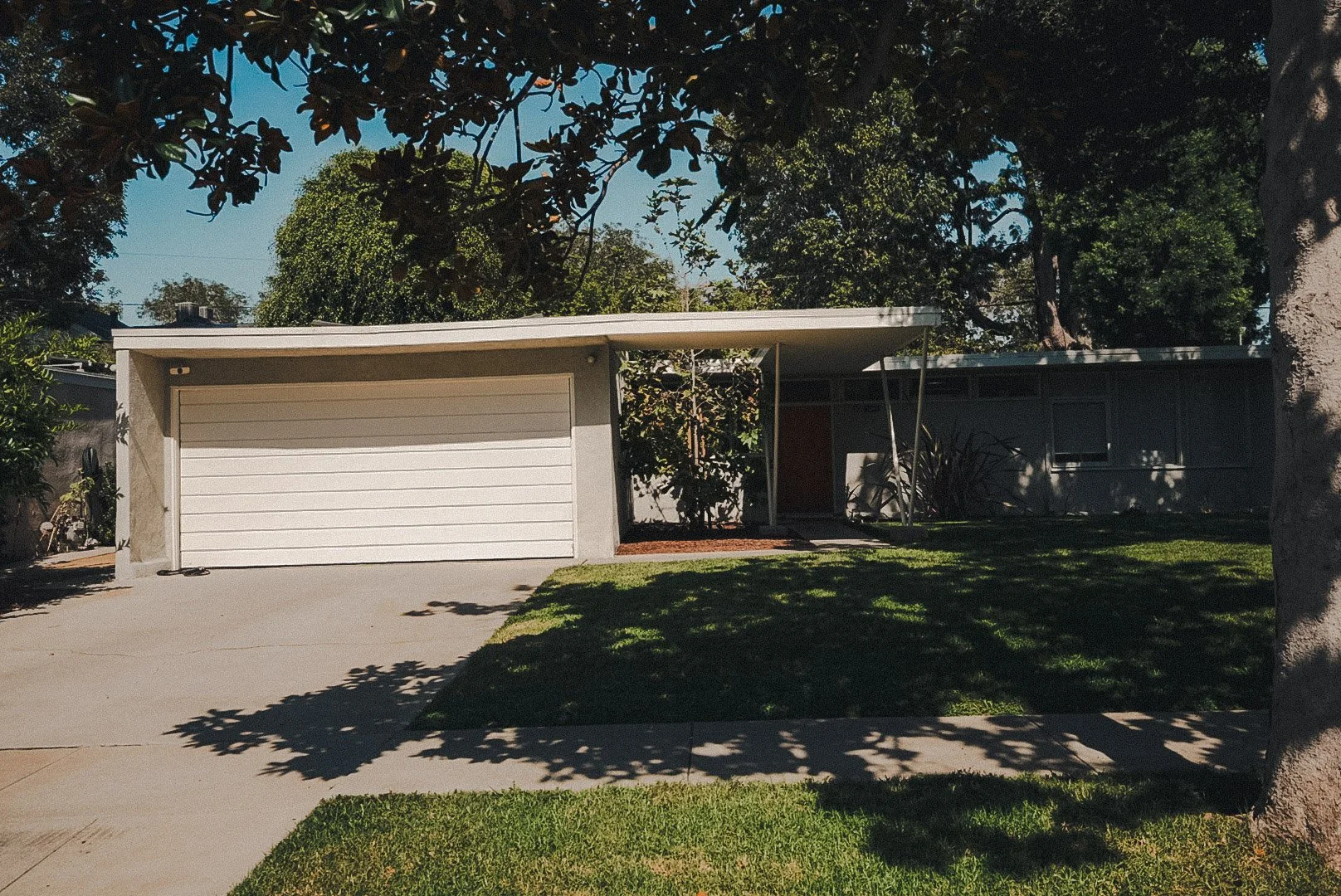
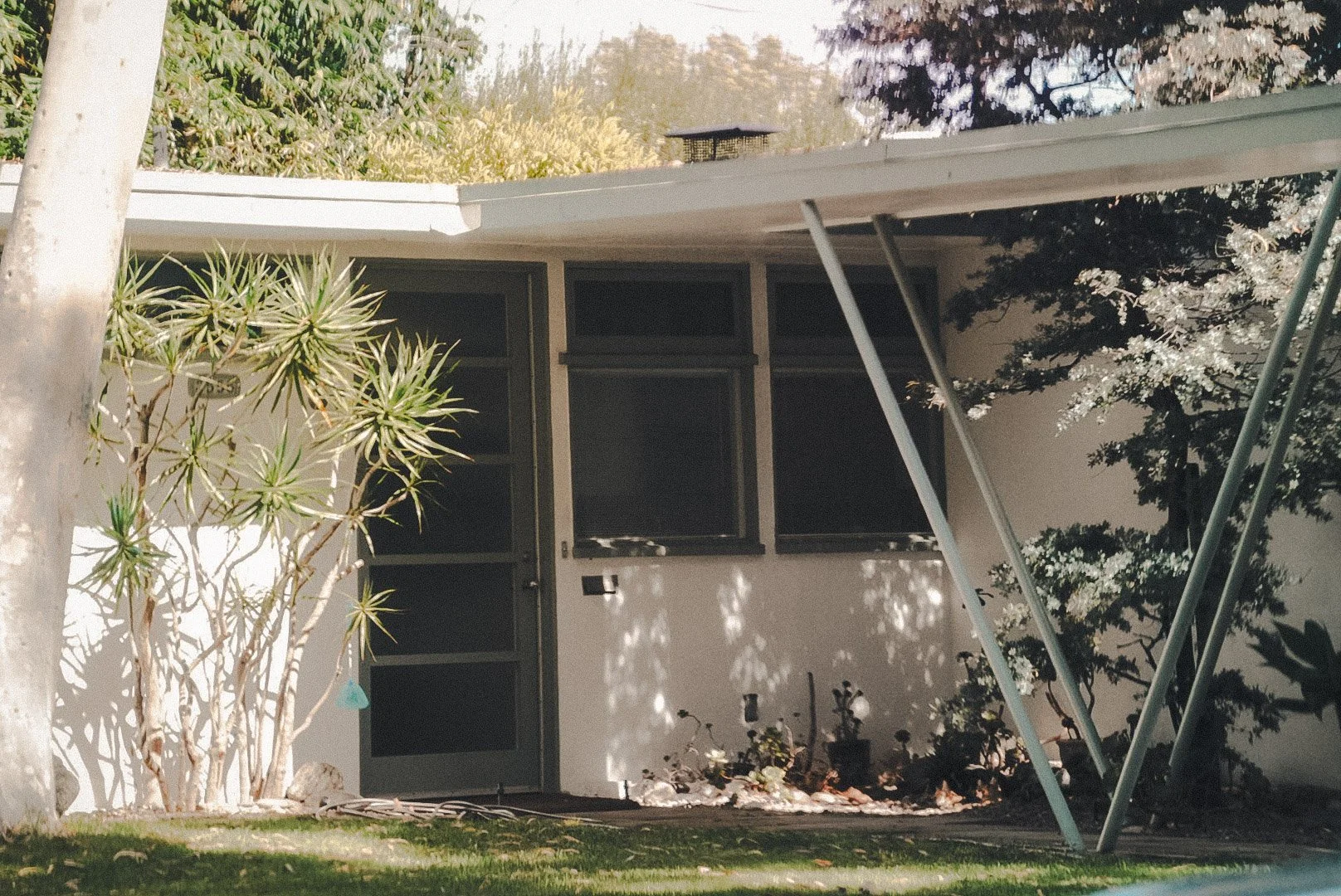
The repetition is architectural. The difference is everything that happened afterward.
Fifty-two houses.
One larger idea.
The Mar Vista Tract was built in 1948 from designs by architect Gregory Ain with Joseph Johnson and Alfred Day. Landscape architect Garrett Eckbo shaped the landscape that connected the houses.
The project relied on a shared Modernist vocabulary rather than fifty-two unrelated architectural statements. Orientation, setbacks, entrances, garage placement, windows, planting, and the relationship between house and garden created variation inside that system.
Los Angeles later designated the tract a Historic Preservation Overlay Zone. But walking it now, the history is less interesting to me as a frozen artifact than as a framework still being lived in.
03
The landscape
keeps interrupting.
That interruption may be the most important thing the photographs reveal.
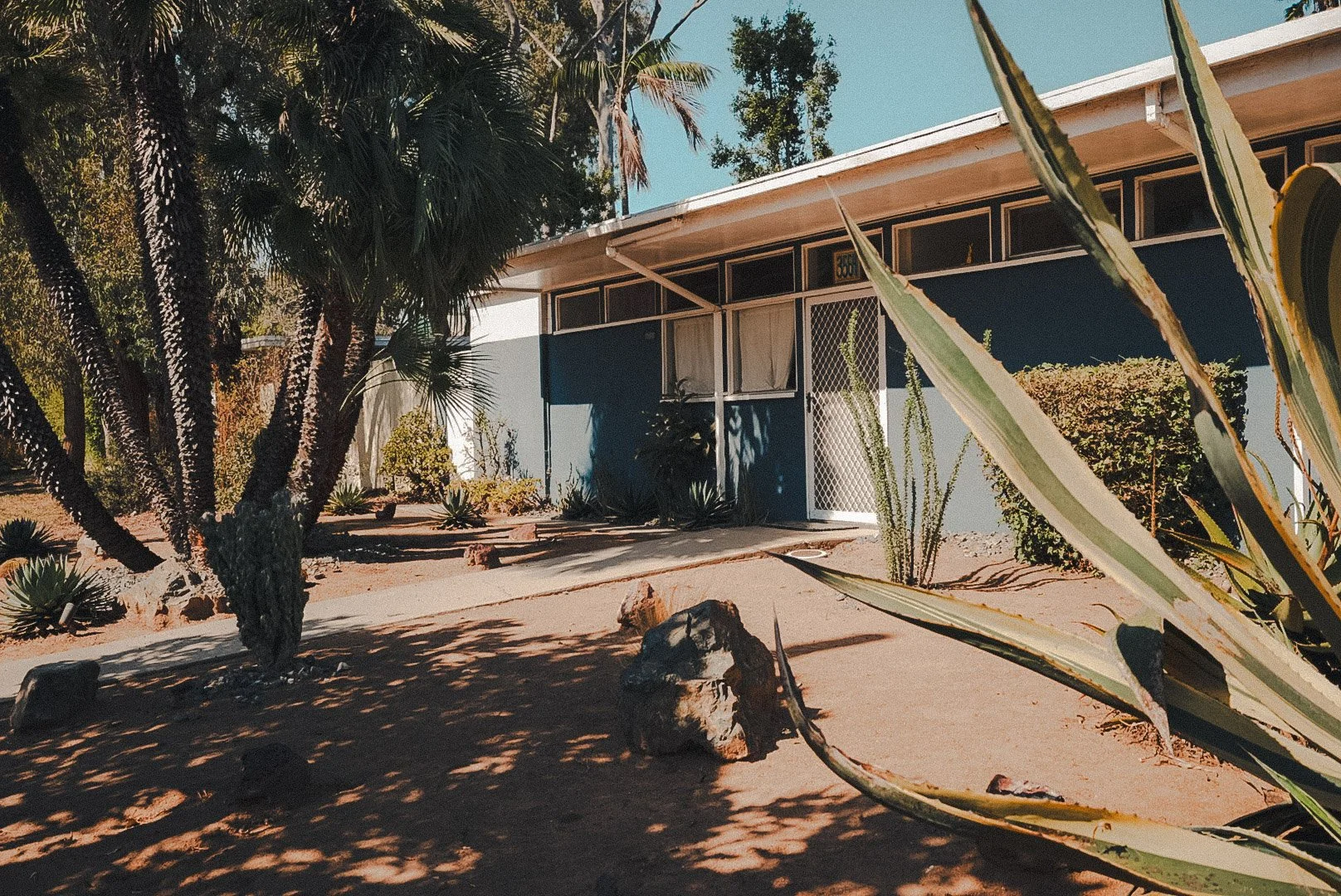
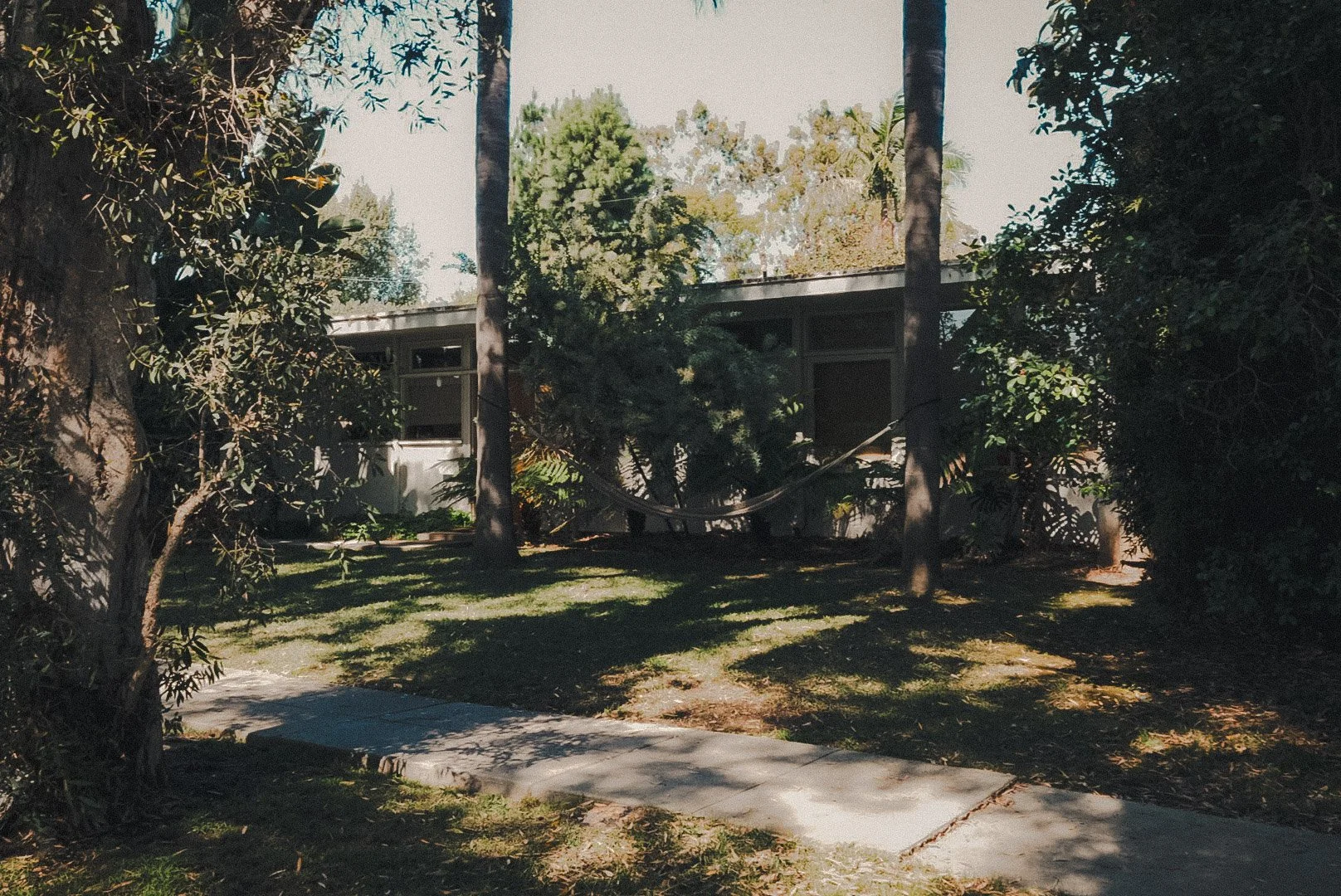
The buildings rarely present themselves as isolated architectural objects. Trees cut through elevations. Ferns cover the lower edge of a facade. Agave leaves enter the frame before the house does. Shade erases portions of walls and windows.
Garrett Eckbo approached landscape as space rather than decoration. Decades later, mature planting has made that relationship even more visible.
Sometimes the photograph contains more landscape than architecture. The house becomes something discovered inside it.
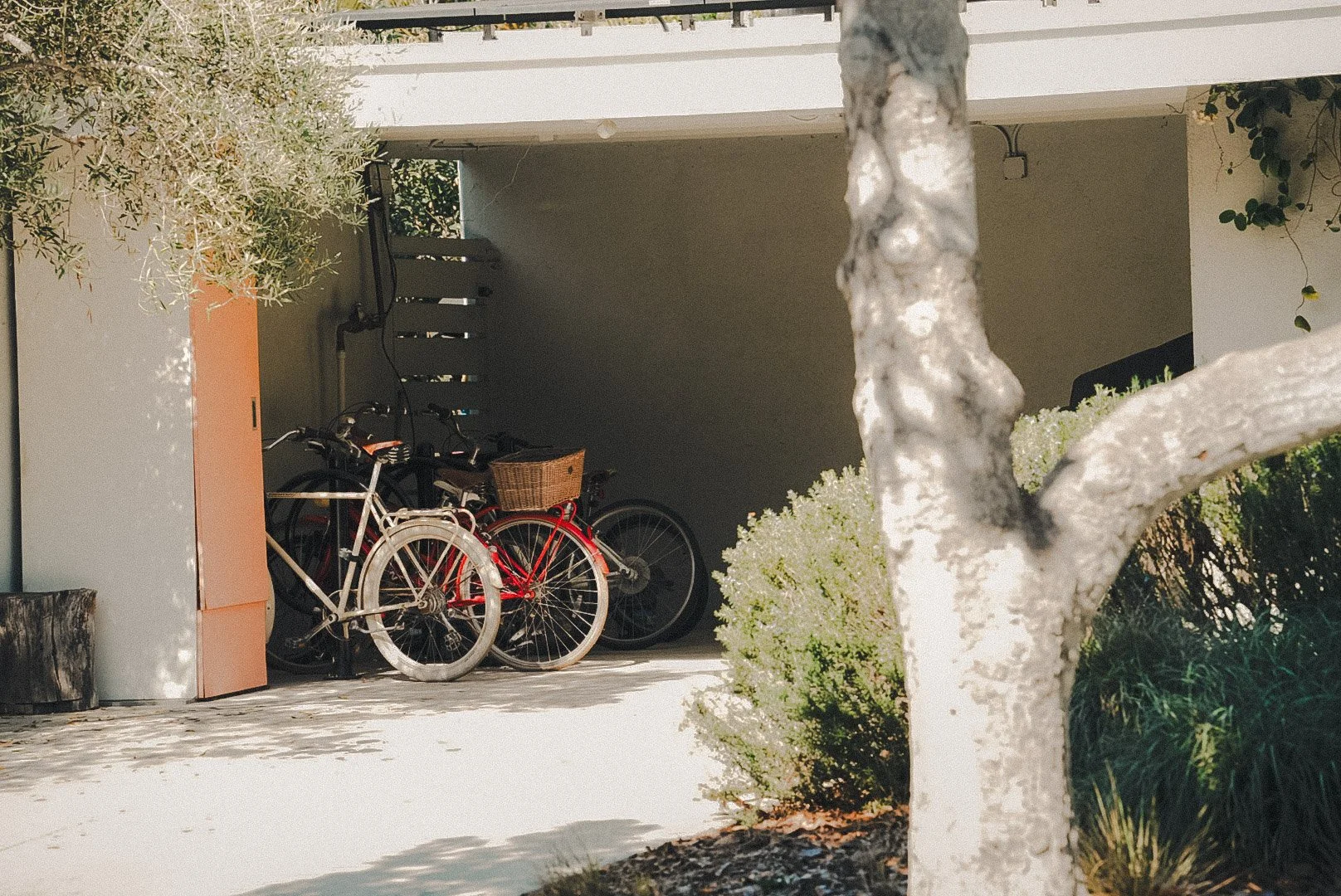
A neighborhood becomes more interesting when the photograph contains evidence that somebody actually lives there.
04
Not a midcentury
theme park.
Mar Vista is larger than the Gregory Ain tract, and not every house photographed during this walk belongs to the historic district.
That distinction matters.
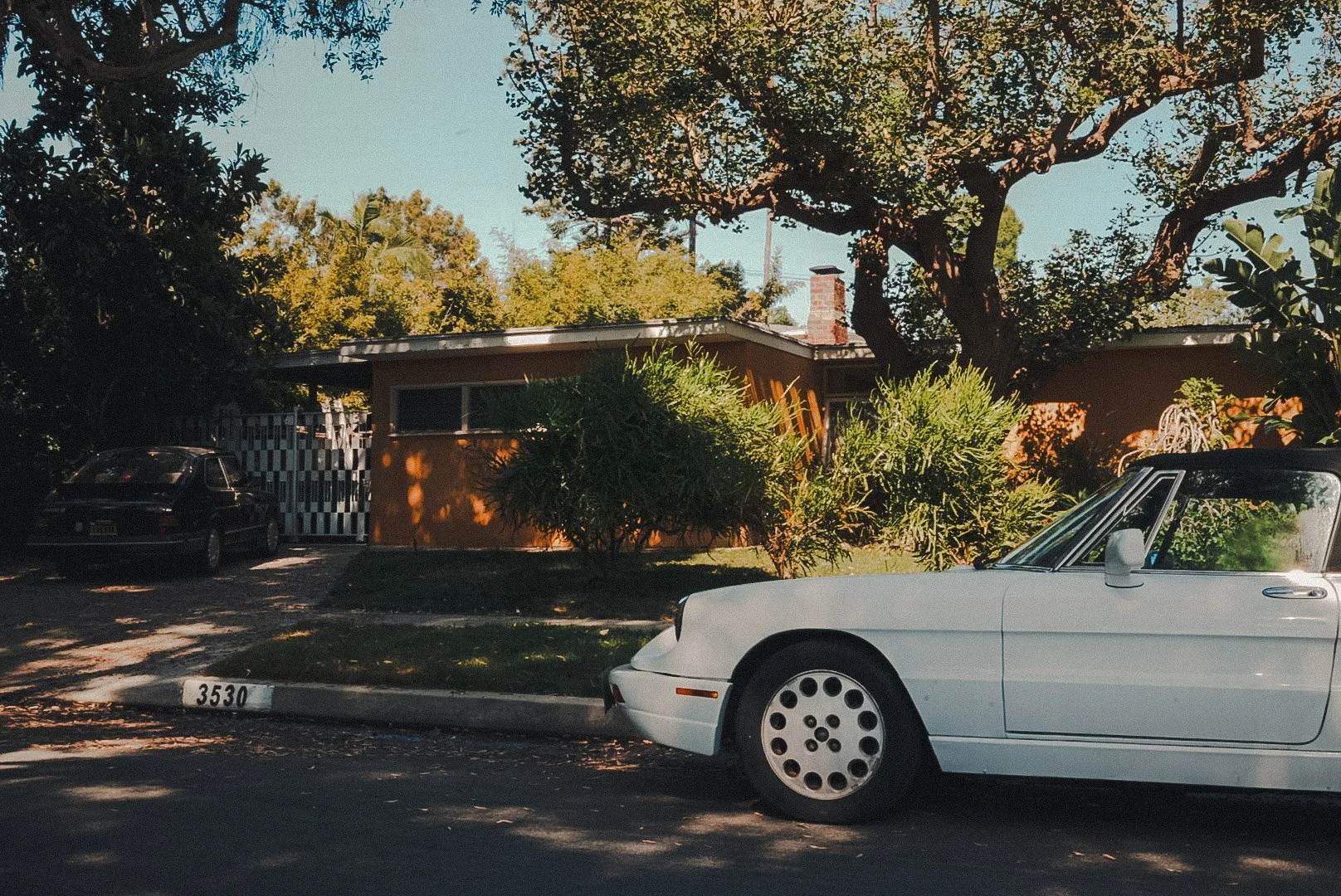
The neighborhood has continued accumulating. Houses have been altered. Gardens have changed. Cars changed. Fences appeared. Colors shifted. Some properties remain restrained; others are highly individual.
That layering is part of what makes the photographs feel like Los Angeles rather than documentation of a preserved architectural specimen.

What remains.
Almost eighty years separate the original tract from the neighborhood I walked through with a camera.
The architecture has aged. The trees grew into something the original photographs could not have shown. Families, objects, cars, renovations, and habits accumulated around a repeated architectural framework.
That is what interests me most about photographing places like this.
A photograph can document architecture. But it can also record what time has done to architecture—and what life has done with it.
Photography Note
All contemporary photographs in this Field Note were made in Mar Vista, Los Angeles. The series includes both the Gregory Ain Mar Vista Tract and the surrounding residential neighborhood; not every home pictured is part of the historic tract.